bluucat:
The answer is: Well, sort of!
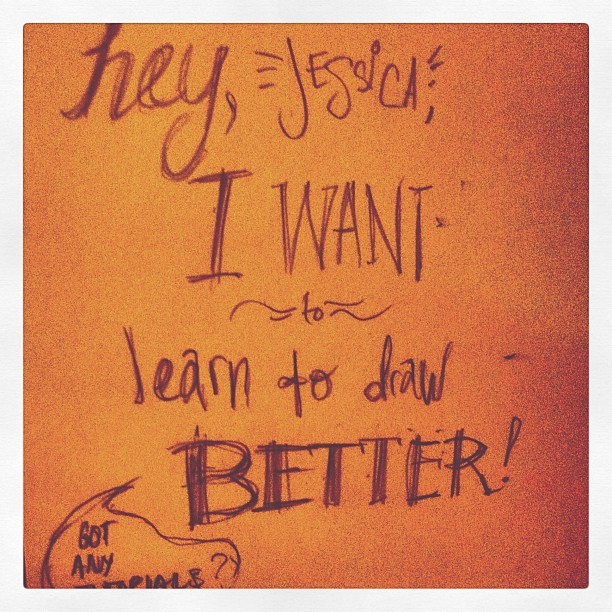
I noticed that a lot of things I’ve been recommended or found useful aren’t really in the masterlists of artist references on tumblr – and the same goes for helpful drawing exercises. So I decided to make my own post.
HOW TO KILL ARTIST’S BLOCK
- There is no such thing as artist’s block, if you frequently draw from life.
- No, really.
- If you are really, truly committed to improving your craft, then it does no good to sit and complain that you “don’t know what to draw”. There is so much around you to draw! 🙂
- In public, try doing gestures of people that walk by. Cafes and shopping malls are great for this, because you have a plausible excuse to be sitting somewhere. Ideally, you don’t want people to notice you’re drawing them— they might try to pose, which makes them look stiff and unnatural.
- The best targets are people studying, anyone deep in conversation, and people at cash registers.
- If there are no people around, draw objects and rooms and practice your perspective.
AWESOME AND FUN EXERCISES FOR ARTISTS AND ILLUSTRATORS
- Draw a portrait where a body part other than the face/head is the focus.
- Do a full spread for a children’s story. It can be a fairy tale or an original story. Make sure to utilize good design principles and pick readable, high quality fonts that match your art style.
- Draw something using only high contrast light and shadow- no lines, no color, no midtones.
- Pick a crime report from the news, preferably an unconventional one. Illustrate it as best as possible, making sure to use a dramatic perspective and lots of realistic detail.
- Choose an object — one you haven’t drawn very much before. Gather lots of reference images. Draw it in two and three point perspective — bonus points if you can take the references and draw them from different angles than they were photographed. The goal here is to be able to visualize it easily without effort. This is a good exercise for product design and ideation, as well as concept art.
- Draw thirty people from life.
- Draw thirty people from your imagination. Make sure they’re just as well proportioned and realistic as your sketches from life.
- Do twenty studies of your hand, in various positions. Bizarre angles and positions are fine, but it’s more helpful to examine the construction of it and get used to drawing hands realistically.
- See above, but with your feet.
- Draw a study of a skull. Do not stylize it. Be careful to pay attention to the proportions and texture.
- Remember your object? Imagine it in a setting where it could be good or evil— perhaps interacting with humans or other objects. Avoid obvious angel/devil associations. Draw 3 pages of thumbnails and sketches imagining it in this way.
- Choose a thumbnail and do two larger sketches of it, and then pick one to bring to completion. Make sure it’s in proportion with accurate lighting for the situation.
- Redesign a fairy tale’s characters in either a modern or non-European setting. Provide costuming references, and make sure to do character sheets and full turns of each.
- Design your own deck of cards — make sure the borders and pattern on the back are paid as much attention as the figures on the fronts.
- Bonus points if you also design and illustrate packaging for the above.
- Do you have a favorite piece of fanart? Draw it as original characters- chances are, you’ve likely put a lot of thought into the relationships and personalities of your favorite characters or OTP, which will show through in an original piece. This is a decently good way to use fanworks in your portfolio, if you feel that they’re better than your original work.
- Draw a car. A really realistic car. Now draw it from a perspective you find really difficult. You are not allowed to take more than half an hour on this total— cars are actually just boxes with some strategic curves, so they should become very easy to gesture once you retrain your brain.
- Draw a table in perspective 5-6 times or so, concentrating on the way it casts a shadow. Make sure to define your light source.
- Design a toy! Draw it from multiple angles — imagine you’re presenting this to someone who has to actually model and produce it. Include as much information as humanly possible. Make sure to include an illustration of its use — you can also create an advertisement, if you’re so inclined.
- If you watch TED lectures, draw portraits of your favorite speakers while you’re viewing them. Try and finish the sketch during the duration of the talk.
- Do an original illustration inspired by two of your favorite illustrators or artists— combining two should help prevent you from directly copying anyone, and force you to think a little harder about solving problems within a work.
- Do 30 studies of animals in motion – housepets or birds are probably going to be the easiest, unless you live by a zoo.
- Fill three full pages of your sketchbook with hard surface studies. (Cars, ships, tractors— you get the idea.) Try to define them with quick, confident lines.
- Make a comic with one panel for each hour of your day. Avoid shortcuts like over the top, animeish emotes and chibi versions of yourself. Make sure to include environments.
- Draw ten illustrations as a series that purposely do not tell a story. They must be as ambiguous as possible. This is really difficult — was originally an assignment from Phoebe Gloeckner, and almost nobody managed to be completely ambiguous. The trick to it is to make sure to create thumbnails of the series first, and look at your work very critically — if anything looks too obviously negative or positive, alter it accordingly.
- Draw yourself combined with your favorite animal, or an animal you feel represents you well. Avoid traditional anthro depictions— try replacing your body parts with the parts you’d find most useful, or thinking of yourself like a sphinx, etc.
- Create a poster for your favorite play.
- Draw yourself at age 7, and age 70. Realistically. Avoid thinking of how cool or uncool you’d be or were. Using pictures of your younger self, or relatives, might help.
- Paint a still life with unconventional lighting or objects. If you must use fruit, use weird fruit, or light it from below.
- Pile books into a tower and draw them in perspective. It’s also fun to make cities out of them, etc.
- Draw yourself every day for a month in the same media to track improvement. Use a mirror, not a photograph.
- Remember your still life? Now illustrate it in the style you’re accustomed to using.
- Draw six busts (head and shoulders) in profile, concentrating on creating an interesting silhouette.
- Do color studies of your favorite movie scenes. If you can’t find screenshots, pause the movie and paint from your television or laptop. Detail’s not as important as strong shapes.
- Draw your favorite place by your home.
- Illustrate a fortune cookie.
- Draw a treehouse or birdhouse and include as many details as possible.
- Design a historical character, and try to make them recognizable by quirks of wardrobe or unique facial features. “Being extraordinarily attractive” does not count.
- Do the 30 day monster challenge!
- Illustrate your favorite recipe. It doesn’t have to be fancy. “How to make pizza rolls” will even suffice. Seriously.
- Make a business card for yourself. Illustrate it. Hey, everyone needs one- and it’s a great exercise for working under strict constraints, since you’ll need to make sure your name and contact info are clearly legible.
- Draw the weirdest object you can possibly find. IKEA is a really awesome place to find weird objects, if you can’t find any in your home.
- Design a knight of the round table, and make sure to research armor, etc— it’s hard to draw! Great practice.
- Draw ten or twenty plants that are currently seasonal.
BOOKS THAT ARE REALLY USEFUL!
- The Art of Ralph McQuarrie. Yeah, this is expensive. But it’s one of the few artbooks that shows an entire process of illustration— if you’re not sure how to proceed from thumbnails to mockups to final pieces, this is probably what you want to be lookin at.
- How to Analyze People on Sight by Elsie Lincoln Benedict and Ralph Paine Benedict. This is available for free online— awesome resource for character design, as it teaches you to think about external characteristics as indicators for personality. Even if it’s not always the most accurate thing ever.
- Leonardo DaVinci’s Notebooks. Yes, I know. Your relatives have even probably tried to get you to look at these. If you can find a good printing of them, though, it’s a really good look at a well used sketchbook.
- The Selected Works of TS Spivet. Not actually a real art reference book, but so many beautiful illustrations and well laid out. Worth a look.
- Drawing with Imagination. Lots of exercises to do if you “can’t think of anything to draw”.
- Any batman artbook. Any of them. I have the OnStar promo one from about ten years back, and it’s still great. There’s a huge mesh of styles going on, and seeing how much thought is put into the character designs and environments is well worth your money. Plus, Batman is cool.
- Any Pixar or Disney artbook that shows the visual development process. The Princess and the Frog is a particularly good example of this, and possibly my favorite, even though I dislike the actual film. They really make sure to show all of their art department’s sketches and preproduction work.
- The Practice and Science of Drawing by Harold Speed. Also available on project gutenberg, and will revolutionize the way you think about drawing. It’s a bit wordy and dated, but worth it alone for the lesson that we do not draw what we see, in reality. Go read it.
WEBSITES THAT ARE VERY USEFUL
- conceptart.org
- behance.net – mostly for inspirational purposes, and worth getting one, if you’re in the industry or trying to be
- http://greyscalegorilla.com/blog/2011/04/fck-you-pay-me/ The most important lesson you will ever learn.
- Noah Bradley’s twitter. Tends to retweet useful advice. Blog is good too.
- http://lackadaisy.foxprints.com/exhibit.php?exhibitid=333 Lackadaisy’s expressions tutorial. Take note, intrepid comickers.
- http://conceptcraniopagus.deviantart.com/gallery/24184227 Here’s some decent concept art tutorials.
- http://galadarling.com/article/i-want-to-be-part-of-an-evil-illustrator-duo Kurt Huggins and Zelda Devon talk about working as illustrators and how to do what they do. Sort of overlooked but vastly awesome.
- http://comictool.blogspot.com/search/label/brushes Do you ink? You should probably try using brushes, if you do. This blog is terrifyingly in depth on your brush needs.
- http://www.retronaut.com/2012/02/soviet-space-propaganda-posters-1958-1963/ Here are some awesome retro posters. Retronaut is a great reference resource in general.
- http://freakshow6.deviantart.com/art/Photoshop-Gouache-Tutorial-177890902 Do you want to be cool like Loish or many other people using this brush? Of course you do! Here’s how to do it. Warning: may be addicting.
- What Skin Colors? How to effectively deal with lighting human skin. Doesn’t include any skintones for POC, unfortunately, as is a common problem with many art tutorials.
- Gradient Tutorial Literally one of the most important things to learn when painting digitally, IMO.
- Texture Brushes Some good brushes.
- DanLuVisiArt Some more good brushes.
- Quick Facial Anatomy Tips …with links to other facial anatomy tips. Of course this isn’t a substitute for drawing from life, but it sure helps 🙂
- http://lostandtaken.com/ Free textures for your work! I would encourage making your own, in the long run, but these work well.
- http://www.watercolorpainting.com/pigments.htm The masterlist of watercolor pigments. Really helpful if you’re ordering from Blick or Utrecht and can’t recall the difference between one pigment or another, god forbid.
- http://minyos.its.rmit.edu.au/aim/a_notes/p_images/walk_2_legs(side).gif How to do various walk cycles. Very exaggerated, of course.
- http://ilovetypography.com/2008/04/04/on-choosing-type/ Nice article on choosing type. You should always be mindful of how your type choice works with your artwork.
USEFUL THINGS TO OWN
- Brown paper sketchbook. Makes defining volume a lot easier, for beginners and advanced artists alike— just get a white pencil and go crazy with highlights.
- Small sketchbook. For all the times you can’t bring an a4 one someplace. Also good for sketching in public. Moleskines are good, as they get mistaken for ordinary notebooks often. See notes on sketching humans in public.
- White pencils.
- Several weights of mechanical pencil— awesome for when you can’t drop pencil shavings places.
- A small package of prismacolor pencils. You don’t need to go crazy, but high quality pencils are really a necessity, IMO. A 12 pack will do. If you find they’re too soft, or keep snapping, try using the Verithin variety instead— they’ve got harder leads.
- A good ruler. At least 6”. Tape pennies to it to avoid bleeding ink.
- Tracing paper, so that you don’t have to completely redraw your semi-final sketch if you like it.
- Masking tape. Keeps paper still on a worktop, and keeps tracing paper in place. Touch it to your clothes a couple times before sticking it to your paper to reduce the stickiness and possibility of your paper ripping.
- Pen and ink. Also some good sable brushes.
- Carbon dust. Not a necessity, but it allows you to “paint” while still getting the effect of a pencil drawing.
- Good kneaded eraser.
- Good white plastic eraser.
- A COMFORTABLE bag. That holds your electronics and wallet as well as all of this.
- Fingerless gloves. If your hands cramp often, these will help.
- A website. Coroflot.com or tumblr will work fine. If using a tumblr, make a separate one for your art.
Wheew. That’s all I have for now, I think!











 Yutaki's Tumblr